Price Last Updated: August 18th, 2026 at 2:49 PM
Tungsten Carbide - $10.00
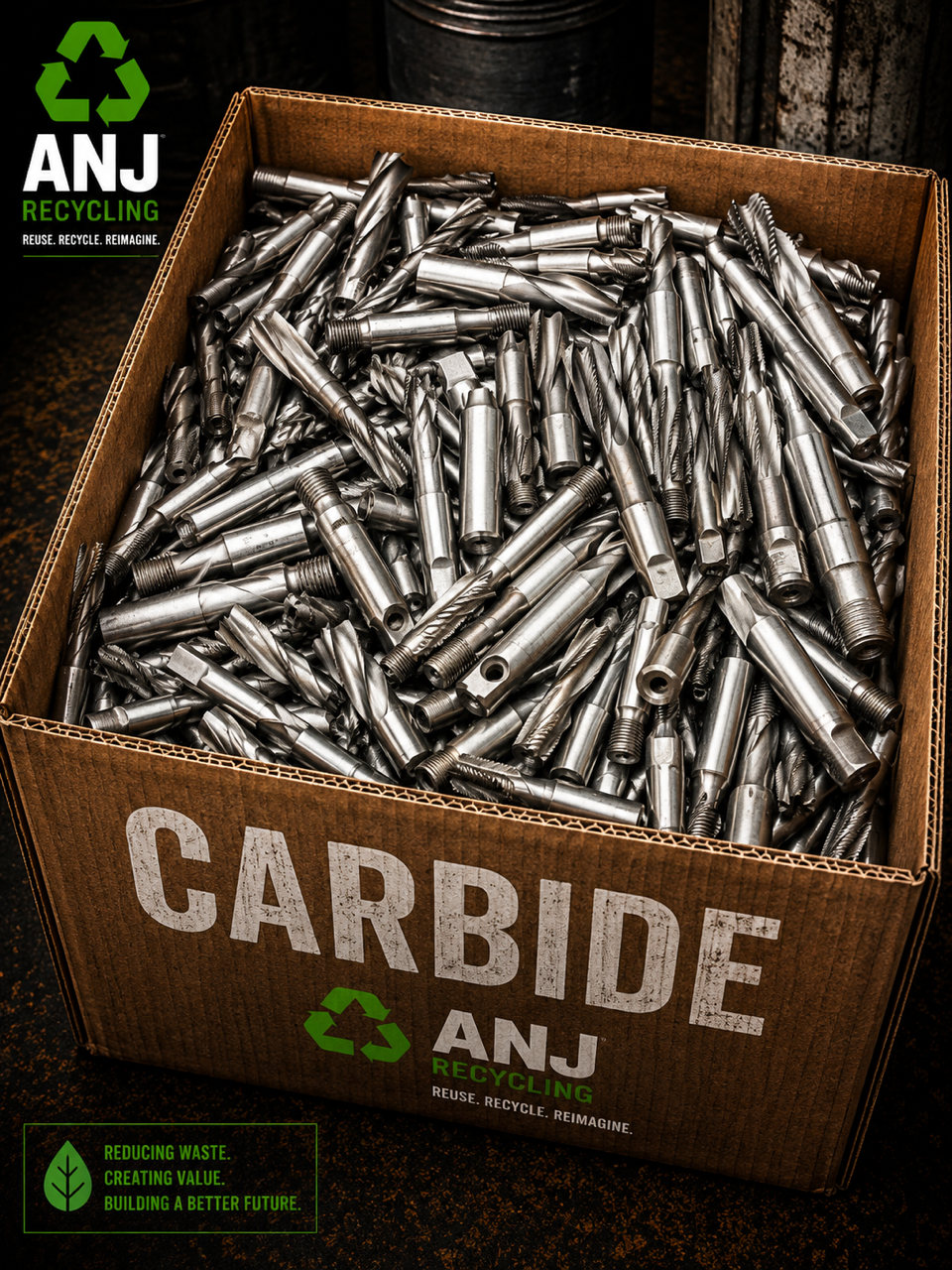
What Is Tungsten Carbide?
Tungsten carbide is a highly durable metal alloy known for its exceptional hardness, strength, and resistance to wear and heat. It is created by combining tungsten and carbon, producing a material that is significantly harder than most common metals.
Because of its ability to withstand extreme pressure, friction, and high temperatures, tungsten carbide is a valuable recyclable material used in many specialized industrial applications.
Where Is Tungsten Carbide Found?
Tungsten carbide is commonly found in cutting, drilling, and machining tools where durability and precision are required. It is often recovered when tools become worn, damaged, or are replaced during industrial operations.
Typical sources include:
- Machine cutting tools and inserts
- Drill bits and mining equipment
- Industrial wear parts
- Milling and grinding tools
- Construction and manufacturing equipment
What Determines Its Value?
The value of tungsten carbide depends on the tungsten content, purity, weight, and overall condition of the material. Higher-quality carbide with minimal contamination generally provides better recycling value.
Because tungsten is a valuable and limited resource, recovering and recycling tungsten carbide helps return this material back into manufacturing processes.
Preparing Tungsten Carbide for Recycling
Proper preparation helps maintain material quality and allows for more efficient processing.
- Separate tungsten carbide tools from other scrap metals.
- Remove excessive dirt, oil, and debris.
- Keep carbide inserts and tooling grouped together.
- Avoid mixing carbide materials with regular steel or other alloys.
Why Recycle Tungsten Carbide?
Recycling tungsten carbide allows valuable tungsten and carbon materials to be recovered and reused in the production of new tools and industrial components.
Since tungsten is difficult and costly to extract, recycling plays an important role in conserving resources and supporting efficient manufacturing.
- Recovers valuable tungsten materials.
- Reduces the need for new raw material extraction.
- Supports reuse in industrial applications.
- Helps conserve valuable resources through recycling.