Price Last Updated: September 17th, 2026 at 1:32 PM
Steel Case Batteries - $0.32
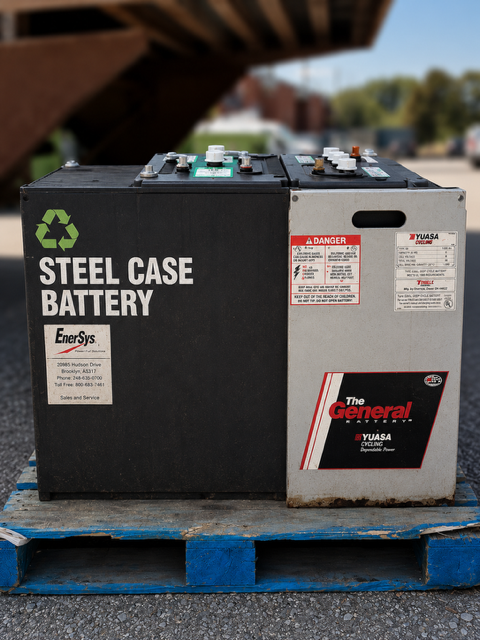
What Are Steel Case Batteries?
Steel case batteries are a type of rechargeable battery that uses a steel outer casing to provide strength, durability, and protection for the internal battery components. These batteries contain recyclable materials such as steel, lead, and other metal components, making them a valuable source of recoverable materials.
Because of their metal content and recyclability, steel case batteries are commonly collected and processed through responsible recycling programs.
Where Are Steel Case Batteries Found?
Steel case batteries are used in a variety of industrial, commercial, and automotive applications. They are often recovered when equipment is replaced, upgraded, or removed from service.
Typical sources include:
- Industrial equipment and machinery
- Backup power and energy storage systems
- Commercial vehicles and heavy equipment
- Telecommunications equipment
- Specialized electrical and power systems
What Determines Their Value?
The value of steel case batteries depends on their weight, battery type, and the amount of recoverable materials they contain. The steel casing, lead components, and other internal materials can be separated and processed for reuse.
Clean, properly sorted batteries are easier to process and may provide better recycling efficiency.
Preparing Steel Case Batteries for Recycling
Proper preparation and handling are important when recycling batteries due to the materials contained inside.
- Keep batteries intact and avoid opening or dismantling them.
- Store batteries upright and handle damaged units carefully.
- Keep batteries separated from general metal scrap.
- Remove excessive dirt or debris from the outside of the battery.
Why Recycle Steel Case Batteries?
Recycling steel case batteries allows valuable metals such as steel and lead to be recovered and reused in new products. Proper recycling also helps prevent battery materials from becoming environmental waste.
Recovering these materials reduces the need for new resource extraction, supports sustainable manufacturing, and keeps valuable metals in circulation.
- Recovers reusable steel and metal components.
- Reduces waste from industrial and commercial equipment.
- Supports responsible battery recycling practices.
- Conserves natural resources through material recovery.