Price Last Updated: August 25th, 2026 at 12:55 PM
Irony Aluminum - $0.25
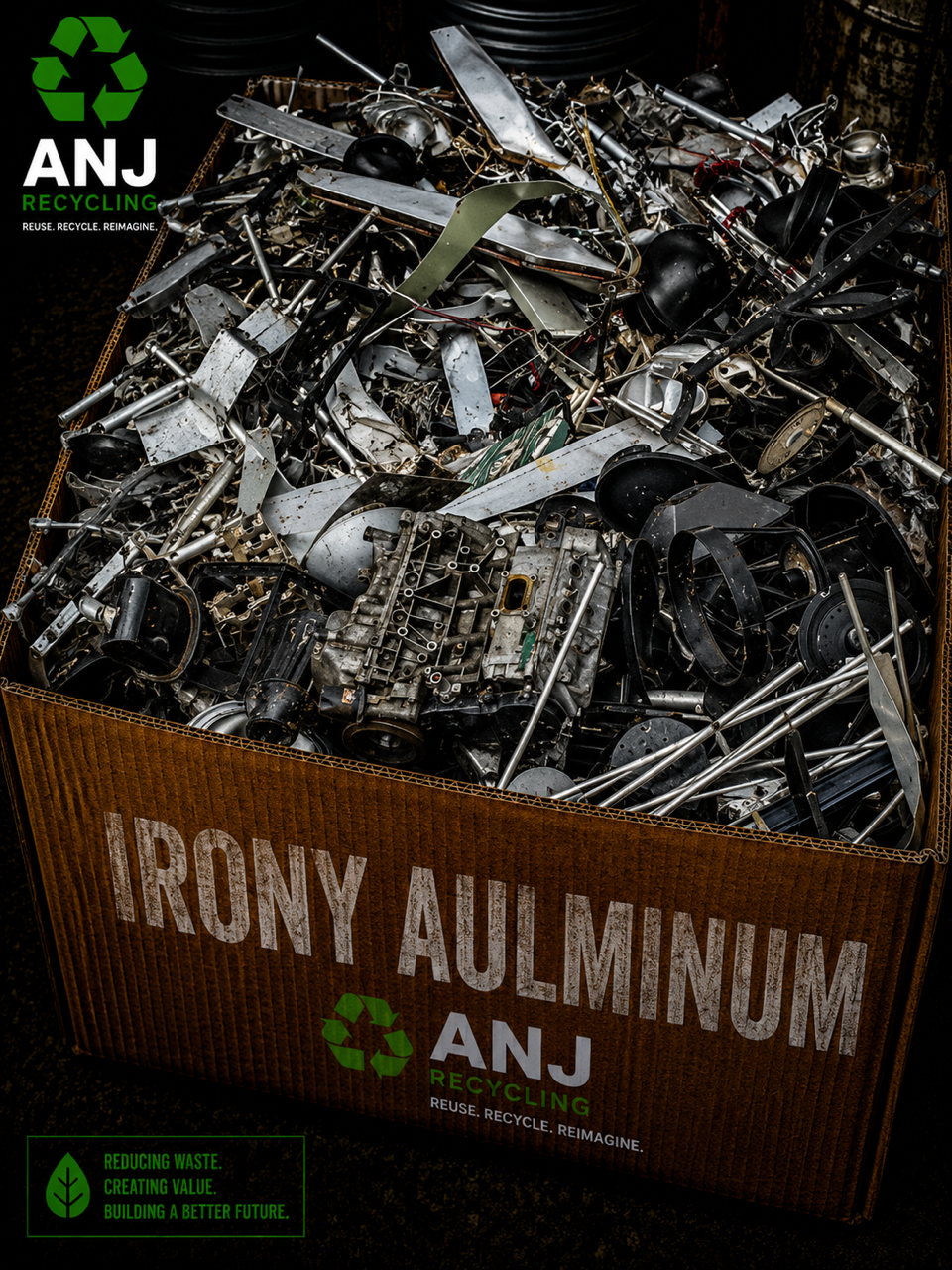
What Is Irony Aluminum?
Irony aluminum is a type of aluminum scrap that contains attached ferrous metals, such as iron or steel. This material is commonly created when aluminum components are collected with steel attachments or when mixed-metal parts are removed from vehicles, machinery, and construction projects.
Although it contains aluminum, the presence of ferrous materials affects the overall grade and value of the scrap because additional sorting and processing are required.
Where Is Irony Aluminum Found?
Irony aluminum is commonly recovered from automotive, industrial, construction, and demolition sources. It is often found in aluminum components that still have steel parts attached.
Typical sources include:
- Automotive parts and machinery components
- Appliances and equipment
- Building materials and construction scrap
- Industrial machinery and mechanical assemblies
- Mixed aluminum and steel components
What Determines Its Value?
The value of irony aluminum depends on the amount of aluminum present, the percentage of attached ferrous metal, and the overall cleanliness of the material.
Cleaner aluminum with fewer steel attachments generally requires less processing and may have a higher value. Material with a large amount of iron, dirt, or other contaminants will typically require additional separation.
Preparing Irony Aluminum for Recycling
Proper sorting and preparation can improve the quality of the material and help ensure efficient recycling.
- Remove loose steel and iron components when possible.
- Separate aluminum from other mixed-metal materials.
- Remove excessive dirt, grease, and debris.
- Keep similar materials grouped together for easier sorting.
Why Recycle Irony Aluminum?
Recycling irony aluminum allows valuable aluminum to be recovered while also separating and processing the attached ferrous metals. Both aluminum and steel can be reused in new manufacturing applications.
Recovering these materials reduces waste, conserves natural resources, and supports more efficient use of existing metals.
- Recovers reusable aluminum and steel materials.
- Reduces waste from industrial and construction projects.
- Supports efficient metal separation and reuse.
- Helps conserve resources through responsible recycling.