Price Last Updated: August 18th, 2026 at 2:49 PM
Electronic Ballasts - $0.26
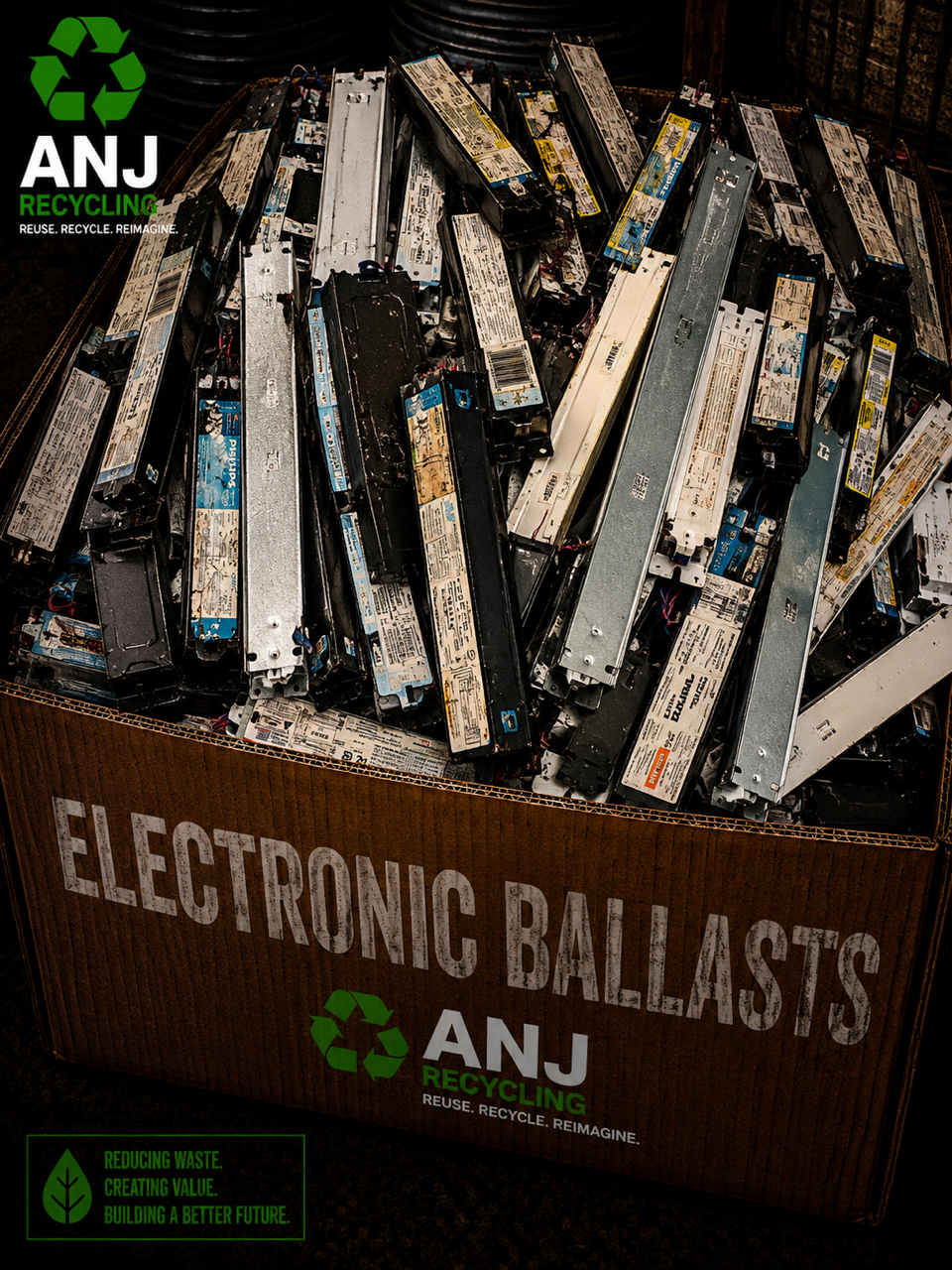
What Are Electronic Ballasts?
Electronic ballasts are electrical components used in modern lighting systems to regulate the current supplied to fluorescent and other types of lamps. Unlike older magnetic ballasts, electronic ballasts use electronic circuitry to provide more efficient lighting operation, improved performance, and reduced energy consumption.
Because electronic ballasts contain recyclable materials such as copper, aluminum, steel, and electronic components, they can be recovered and processed as a source of valuable scrap materials.
Where Are Electronic Ballasts Found?
Electronic ballasts are commonly found in commercial, industrial, and institutional lighting systems. They are often recovered during lighting upgrades, building renovations, and the replacement of older electrical equipment.
Typical sources include:
- Office and commercial lighting fixtures
- Schools and public buildings
- Warehouses and industrial facilities
- Fluorescent lighting systems
- Modern electrical lighting equipment
What Determines Their Value?
The value of electronic ballasts depends on their size, weight, internal components, and the amount of recoverable metals they contain. Copper wiring, aluminum components, and steel housings may contribute to their recycling value.
Since electronic ballasts contain circuit boards and mixed materials, they often require additional sorting and processing compared to traditional metal components.
Preparing Electronic Ballasts for Recycling
Proper preparation helps improve sorting efficiency and allows recyclable materials to be recovered more effectively.
- Remove ballasts from lighting fixtures when possible.
- Keep electronic ballasts separated from regular metal scrap.
- Remove excessive dirt, dust, and external debris.
- Group similar electrical components together for easier handling.
Why Recycle Electronic Ballasts?
Recycling electronic ballasts allows valuable metals and electronic components to be recovered and reused in new manufacturing applications. Recovering these materials reduces waste and helps keep useful resources in circulation.
Proper recycling of electronic lighting components supports responsible material recovery, conserves natural resources, and reduces the environmental impact of discarded equipment.
- Recovers valuable copper, aluminum, and steel components.
- Reduces waste from lighting upgrades and replacements.
- Supports efficient recovery of electronic materials.
- Helps conserve resources through responsible recycling.