Price Last Updated: August 18th, 2026 at 2:49 PM
Desktop - $0.70
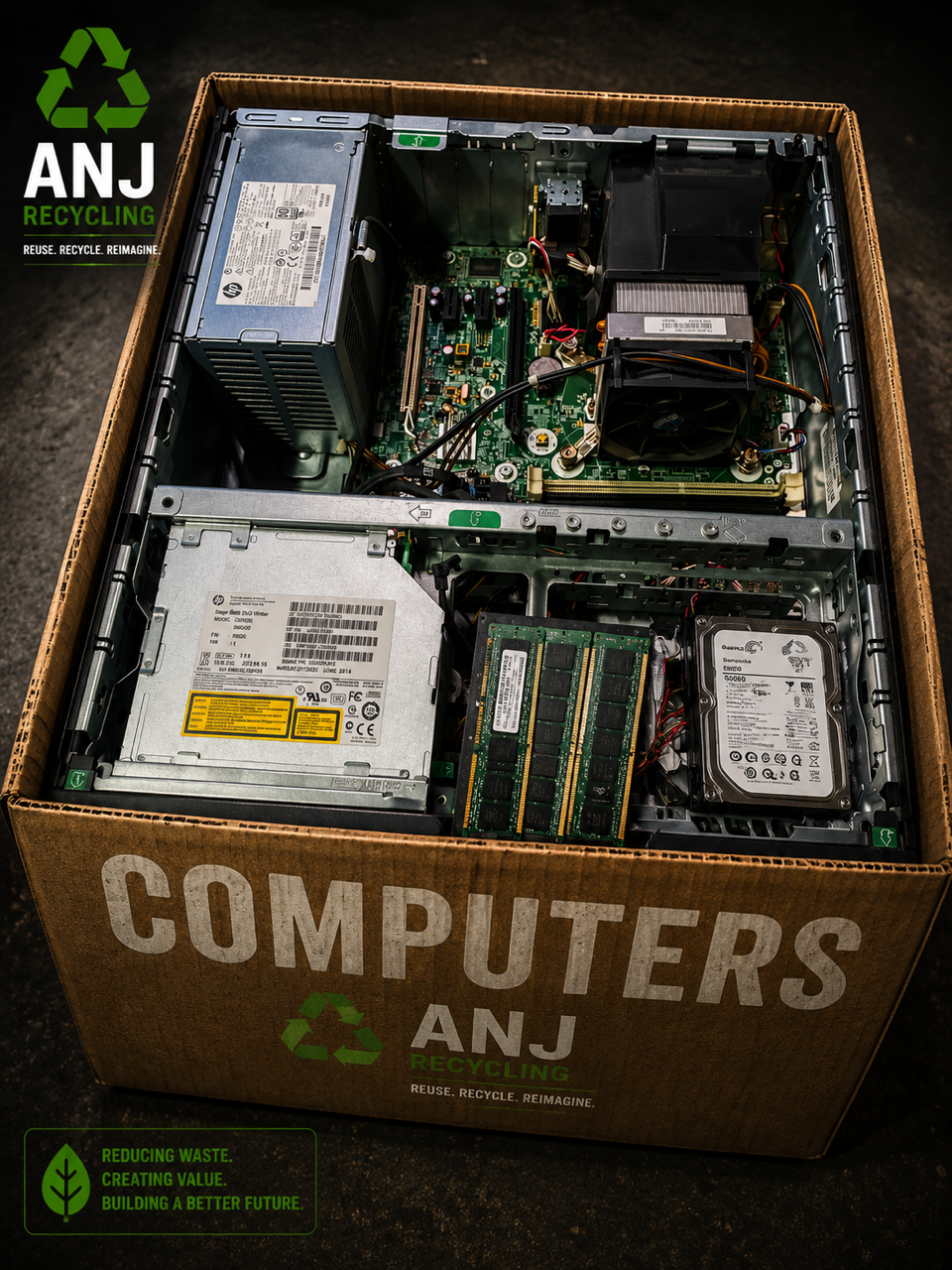
What Are Desktop Computers?
Desktop computers are electronic systems designed for everyday computing, business operations, and specialized applications. They are made up of several recyclable components, including steel cases, aluminum parts, copper wiring, circuit boards, processors, and other electronic materials.
Because desktop computers contain a variety of valuable recyclable materials, they are an important source of recoverable metals and electronic components.
Where Are Desktop Computers Found?
Desktop computers are commonly recovered from homes, businesses, offices, schools, and industrial locations when systems are upgraded, replaced, or no longer in use.
Typical sources include:
- Office computer upgrades
- Business and commercial equipment replacements
- Schools and institutions
- Home electronics recycling
- Industrial computer systems
What Determines Their Value?
The value of desktop computers depends on their age, condition, quantity, and the types of components they contain. Internal parts such as motherboards, CPUs, memory modules, hard drives, power supplies, and copper wiring contribute to their recycling value.
Complete systems generally provide better recycling potential because more components can be recovered and properly sorted.
Preparing Desktop Computers for Recycling
Proper preparation helps protect information and improves the efficiency of the recycling process.
- Remove or securely erase personal and business data.
- Keep computers separated from general waste.
- Remove accessories and external devices when possible.
- Collect larger quantities together for easier processing.
Why Recycle Desktop Computers?
Recycling desktop computers allows valuable materials such as copper, aluminum, steel, and electronic components to be recovered and reused in new products. Recovering these materials reduces electronic waste and helps conserve natural resources.
Responsible computer recycling supports sustainable manufacturing, reduces landfill waste, and keeps valuable materials in circulation.
- Recovers valuable metals and electronic components.
- Reduces waste from outdated technology.
- Supports efficient electronic material recovery.
- Helps conserve resources through responsible recycling.